A platform with a chipped corner and a row of cracks along the side. The damage came from an impact. Three days of work. These are the photographs, before and after.
What you are looking at
Gelcoat is the outer layer of a fibreglass boat, the part that gives it its colour and its shine. It is also the first layer to meet the pontoon, the fender and the ladder. Damage to it is cosmetic at first. Left alone, water finds a way in and it stops being cosmetic.
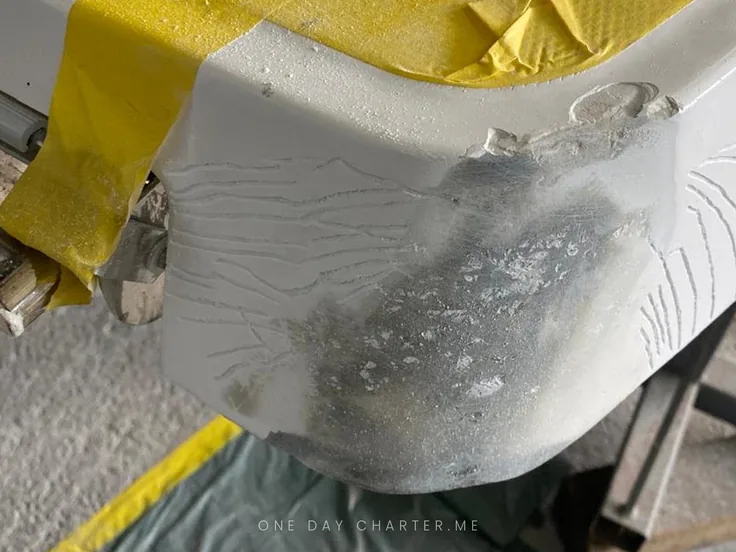 Before
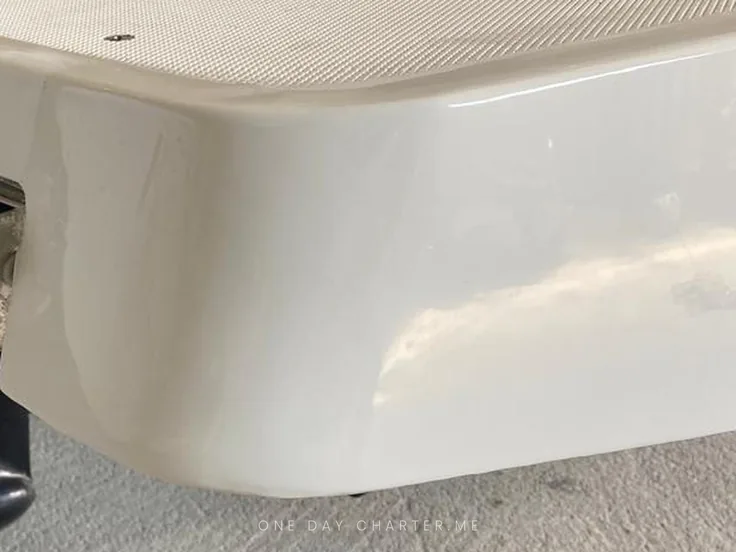 After
After
Who does the work
Marko. He graduated from the Faculty of Maritime Studies in Kotor. He is a skipper and a marine technician who grew up around boats. He does the work himself, so the answer to any question about that work comes from the man holding the sander.
The colour is the harder half
Anyone can fill a scratch. What decides whether a repair is invisible or obvious is the shade. White is never simply white. A hull that has spent ten seasons in the Adriatic sun is no longer the white that left the factory, so new gelcoat has to be mixed to the tone the boat has today and not the tone it once had. Marko mixes and tests until the patch disappears into the surface. That step is slow and it is the step he refuses to rush.
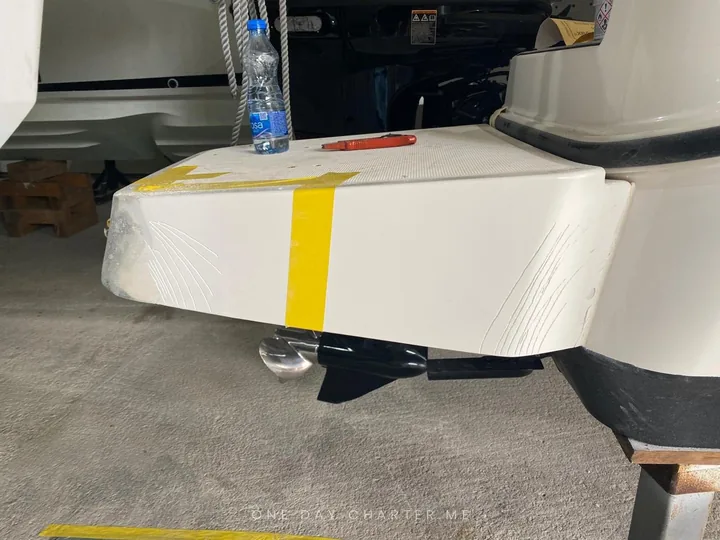 Before
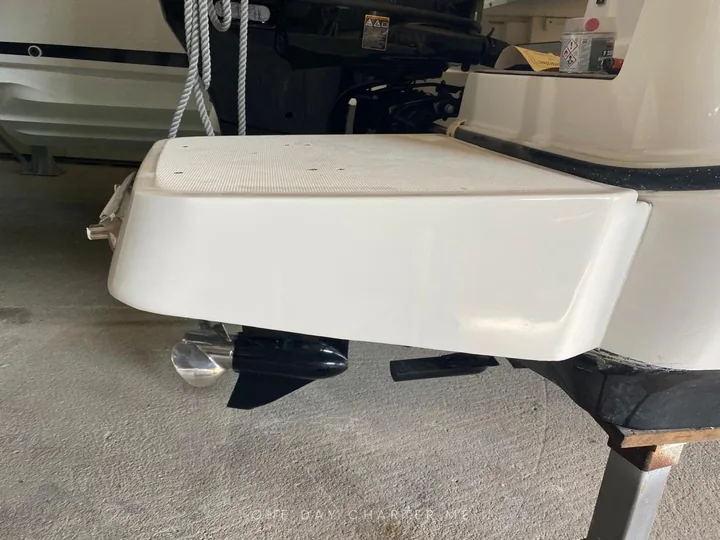 After
After
How it works
He comes to the boat and looks at it. The visit and the assessment are free. After that you get a quote and a deadline, both based on what he actually saw.
The price follows the size of the area that has to be repaired. The weather decides how long the work takes, because a boat lying at its berth is worked on outdoors and gelcoat cures on the weather's terms and not ours.
Where
Every marina in Montenegro: Tivat, Kotor, Herceg Novi, Budva and Bar. On the hard and in the shipyard too, wherever the boat happens to be.
Handover
When the work is done the owner comes and inspects it.